
If you have been diagnosed with scoliosis, the curve itself is followed by an orthopaedic specialist. What we look at here, in English, is the back and neck pain that often comes with it. This page explains where that line sits.
What scoliosis is and who manages it
Scoliosis is a sideways curve of the spine with some rotation of the vertebrae. It is measured in degrees on an X-ray, and its follow-up, including any decision about a brace or surgery, belongs to an orthopaedic surgeon or spine specialist (traumatólogo in Spain). That matters most in children and teenagers, because that is when a curve can progress.
In adults, an established scoliosis is usually stable. What changes over the years is not so much the curve as the load it puts on muscles and joints.
What people often notice
Many people with scoliosis have no pain at all, and having a curve does not mean you will. When pain does appear, what we hear most is this: one side of the back tiring before the other, the lower back complaining after standing for a while, one shoulder sitting higher and feeling tight, and not finding a comfortable position by the end of the day.
Symptoms often show up at particular times: more hours at a desk, a new job, a pregnancy, a long trip, stopping exercise. The curve is the same; the load has changed.
What we do not do here
We do not straighten the curve. No manual therapy straightens a structural scoliosis, and anyone who says otherwise is not being honest with you.
We do not replace a brace or your specialist’s follow-up.
We do not advise you on whether to have surgery. That decision is between you and your surgeon, with your scans in front of you.
What we do look at
- Low back and mid-back pain from uneven loading.
- Neck pain and constant tension across the shoulders.
- Stiffness when turning or bending.
- Discomfort after standing or sitting for a long time.
A spine that works unevenly tires sooner. Easing that load and keeping it moving does not change the degrees of the curve, but it can change how you feel at the end of the day. That difference is worth being clear about.
Day to day
Moving helps more than protecting. Walking, swimming or whatever exercise you enjoy are good allies. If your specialist or physiotherapist has given you exercises, those come first.
Change position often. What tires the back is holding any position for hours, more than the position itself. Get up regularly if you work at a desk, and break up long drives and flights.
Share the load. Both straps on a backpack, shopping in both hands, and switch the shoulder you carry a bag on.
When to see your specialist, not us
Go back to your specialist if the curve seems to be changing (clothes hang differently, a shoulder or hip looks higher than before), if pain wakes you at night, or if you notice weakness, numbness that does not go away or changes in bladder control. In children and teenagers, any question about the curve goes to the specialist first.
How the first visit works
You will see José De San Juan Guerrero, D.C., Doctor of Chiropractic and a registered physiotherapist in Spain, with more than 25 years in practice in central Málaga. The whole visit can be in English.
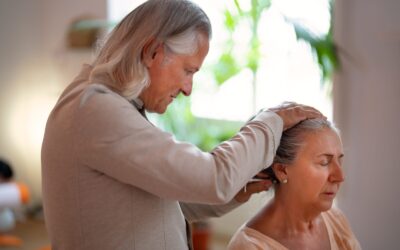
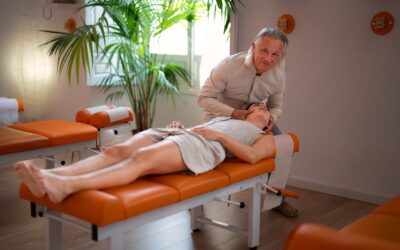
We start by listening: when you found out, who follows you, the degrees of your curve if you know them, what you are finding hard today. Then comes the physical examination and the postural analysis, and an explanation of what we found before anyone touches you. Bring your X-rays or reports, ideally with the Cobb angle measured, even if they are in another language.
Why come, even when a specialist follows your scoliosis
Your specialist watches the curve: how many degrees, whether it is progressing, whether a brace is needed. But a stable curve can still cause trouble, and nobody deals with that at a check-up every year or two.
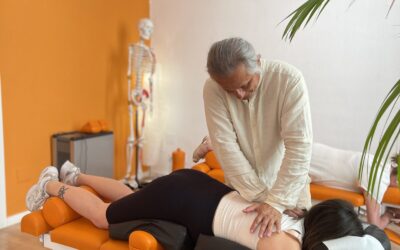
That part is ours. What we work on is movement: getting stiff segments of the spine moving again and taking some of the load off the side that does all the work. That does not change the degrees, and we will not sell it to you as if it did. But a back that moves better is noticeable: getting to the end of the day without that ache on one side, standing in a queue, sleeping without searching for a position.
If at the first visit we see that you need something else, a new X-ray or a return to your specialist, we will tell you that same day. We would rather tell you than let you waste time and money.
Frequently asked questions
Can the spine be straightened?
No. A structural scoliosis is not straightened by manual therapy. What can be worked on is the pain and stiffness that come with it.
I have had scoliosis for years and it never hurt. Why now?
Usually because the load has changed. We look at what changed.
Do you see children and teenagers?
Yes. At that age the scoliosis is followed by an orthopaedic specialist or paediatrician, who decides on check-ups, bracing or surgery if needed. Here we look at back pain and movement, alongside that follow-up and never instead of it. Bring their X-rays and reports.
Do I need a referral?
No. Just bring your X-rays and reports.
Book your first visit · Chiropractor in central Málaga, in English · C/ Córdoba 6 · +34 629 245 594 · WhatsApp
Esta página también está disponible en español: Escoliosis y dolor de espalda en Málaga.
This clinic works on musculoskeletal complaints of the spine and joints. We do not diagnose or treat systemic, respiratory, autoimmune, metabolic or neurological disease, and we do not replace prescribed medical treatment. If you have a diagnosis of that kind, your specialist is the one who manages it.
Reviewed by José De San Juan Guerrero, Doctor of Chiropractic (Sherman College of Chiropractic, USA) and registered physiotherapist (Andalusia, no. 5960). Last reviewed: .
References
- Negrini S, et al. 2016 SOSORT guidelines: orthopaedic and rehabilitation treatment of idiopathic scoliosis during growth. Scoliosis and Spinal Disorders. 2018. PubMed